Top story
Kanpur ₹5,600 Crore Cyber Fraud: Police Arrest Third Accused
Kanpur police have arrested a third accused in the ₹5,600 crore cyber fraud network; about ₹49 crore allegedly passed through three accounts in his name.
Read the story →Top story
Kanpur police have arrested a third accused in the ₹5,600 crore cyber fraud network; about ₹49 crore allegedly passed through three accounts in his name.
Read the story →Malaysia cyberattacks: 16 reports filed with police from 10 to 31 October cost victims RM79.16 million, Bukit Aman says, most of it in cases of compromised hardware and lost crypto.
What India's DPDP Act and Rules ask after a personal data breach, which parts are in force, and how they sit next to CERT-In's six-hour reporting rule.
CyberArk research finds 95% of Asia Pacific and Japan organisations suffered two or more identity breaches, with machine identities the least protected.
Group-IB flagged 500+ phishing IPs and 1,900+ malware IPs for INTERPOL's Operation Synergia, which led to 31 arrests and hundreds of C2 server takedowns.
Every connectivity piece of Cloudflare One, its single-vendor SASE platform, is now generally available, including the Magic WAN Connector branch appliance.
Lumen's managed EDR service for Asia Pacific: AI detection on laptops and PCs, automatic rollback, a 24/7 SOC line, and an IDC security assessment called X-Secure.
Tim Liu of Hillstone Networks names the shifts he expects in 2024: AI threats, cloud gaps, a wider attack surface, human error and digital trust.
Jumio's Frederic Ho argues that biometrics alone won't stop bank fraud in Malaysia without liveness checks and risk scoring on each login.
Norman Willox and Tom Patterson argue that steal-now-decrypt-later attacks make quantum-safe encryption urgent, and set out a four-step plan to prepare.
Keysight's Keith Bromley explains how a visibility architecture of taps and a network packet broker lets companies get more years out of existing security tools.
Tony Teo of NETSCOUT Arbor on how DDoS moved from volumetric floods to application and stateful attacks, and why criminals still rely on it.
Cybereason's Eric Nagel and PLDT and Smart CISO Angel Redoble explain the Defend Forward strategy, the Cyber Defenders Council and why people still decide the fight.
ManageEngine's Subhalakshmi Ganapathy explains why Southeast Asian firms are exposed to breaches and leaks, and what adaptive security requires.
Veritas's Gary Sievers on rising ransomware in Asia Pacific, the security gap left by COVID-era transformation, and a protect, detect and recover framework.
RMM tools are known for automating IT chores for managed service providers. N-able argues its N-sight platform also closes security gaps for their clients.
A Tenable survey of 1,500 security professionals shows how firms entering the metaverse rate the risk of deepfake avatars, eavesdropping and phishing.
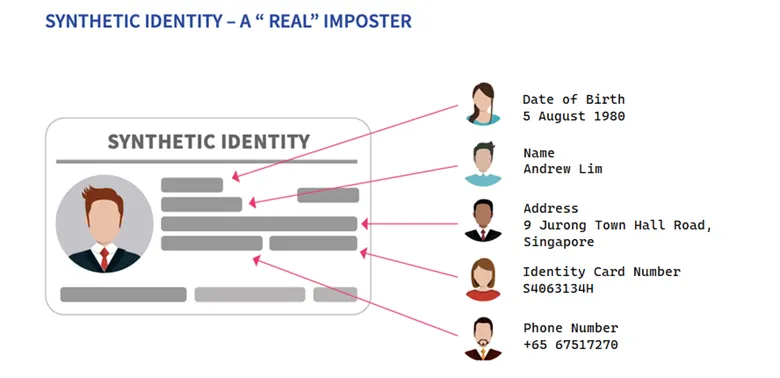
Synthetic identity fraud blends real and invented personal details into a new person. Why banks in Southeast Asia struggle to spot it and what detection relies on.
Ransomware hit several Singapore organisations in 2021. Cohesity's Threat Defense, DataGovern and Project Fort Knox aim to put prevention first.
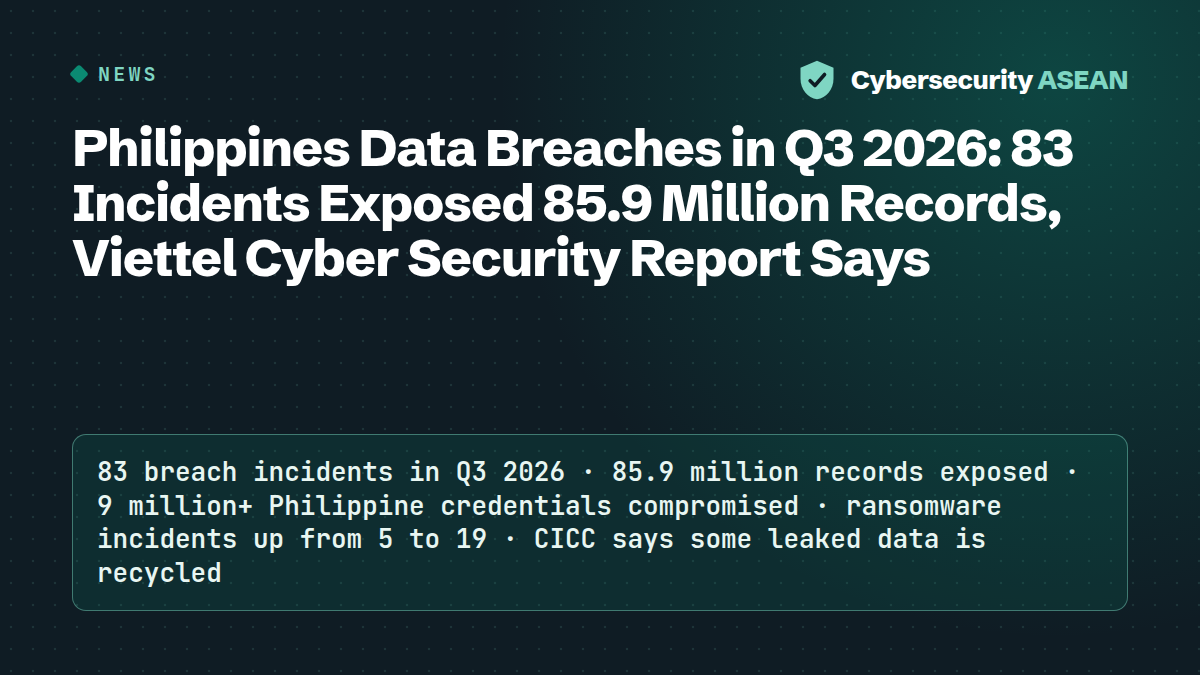
Philippines data breaches in Q3 2026: Viettel Cyber Security counted 83 incidents exposing 85.9 million records, and more than 9 million Philippine credentials compromised.
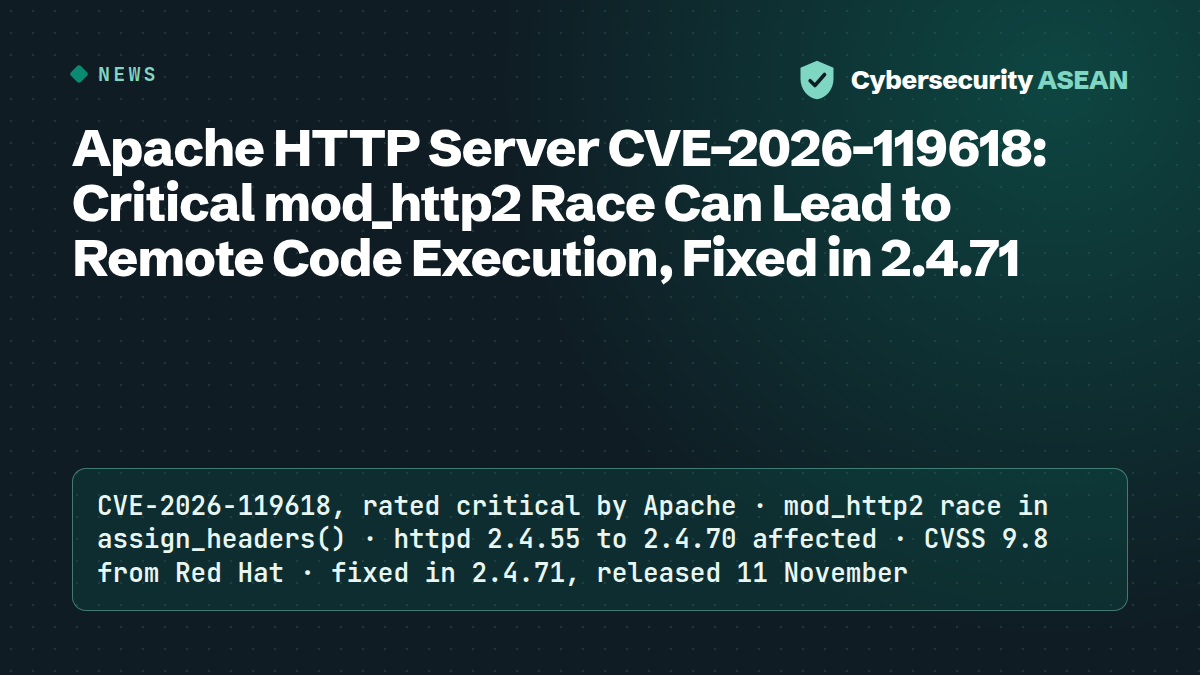
Apache HTTP Server CVE-2026-119618 is a critical race in mod_http2 that can lead to remote code execution on httpd 2.4.55 to 2.4.70. Version 2.4.71 fixes it.
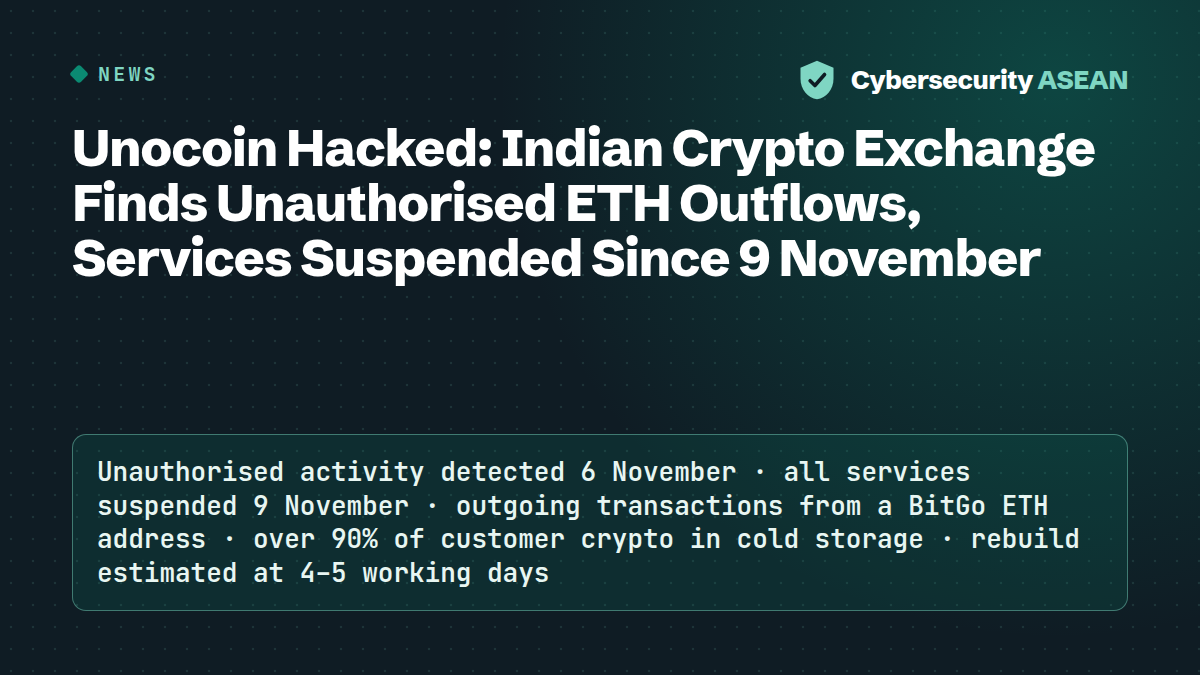
Unocoin hacked: the Indian crypto exchange says outgoing transactions left one of its ETH addresses at custodian BitGo. Services have been suspended since 9 November.
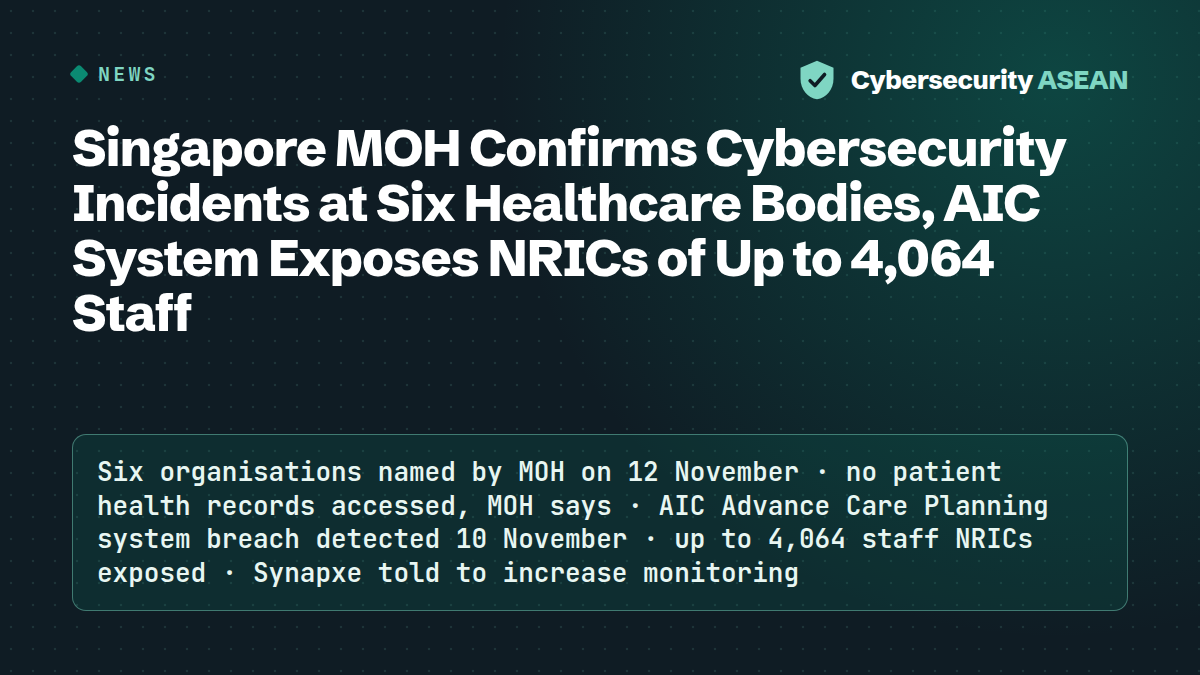
Singapore's MOH says six healthcare bodies were hit by unauthorised access, with no patient health records reached. The newest, AIC's care planning system, exposed up to 4,064 staff NRICs.