How a Vulnerability Disclosure Policy Reduces Security Risk
HackerOne's Rena Chua explains why a vulnerability disclosure policy gets flaws reported rather than hidden, and the five elements every policy should include.
Topic
HackerOne's Rena Chua explains why a vulnerability disclosure policy gets flaws reported rather than hidden, and the five elements every policy should include.
What the Fortinet Security Fabric is, as Fortinet describes it: a network-wide security architecture with three attributes and five pillars.
Keysight's Scott Register cites the Verizon DBiR on rising error-driven breaches and lists six internal checks, from SSL decryption to URL filtering.
ManageEngine's Mohamed Jafriin N H argues that real-time log analysis, user tracking and automated response are how companies catch breaches early.
Xiamen University Malaysia's Sepang campus runs on a Huawei network with Wi-Fi 6, programmable switches and a modular data centre that halved deployment time.
Fileless intrusions run shellcode in memory, steal credentials, escalate privileges and stay hidden from antivirus. How each stage of the attack works.
CrowdStrike Services president Shawn Henry discusses Asia Pacific threats, nation-state intrusions, big game hunting ransomware and the 1-10-60 response rule.
Why machine learning suits malware defence better than signature files, how to tell real ML from marketing, and how CrowdStrike Falcon applies it.
Fileless attacks slip past antivirus by running through shellcode, scripts and registry entries. How they work, how fast they are growing and how to stop them.
Ivanti and Huawei have signed an MoU under which Huawei uses Ivanti's endpoint management and security tools with its CloudCampus access control system.
Ivanti Automation, free to Ivanti customers, brings over 300 built-in tasks to automate IT, service management and security work across on-premises and cloud.
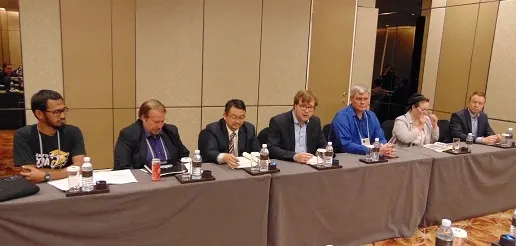
The 30th FIRST conference drew a record 829 attendees to Kuala Lumpur, where speakers urged closer ties between incident responders and policy makers.